

The Idea Still Doesn't Come Out of the Computer
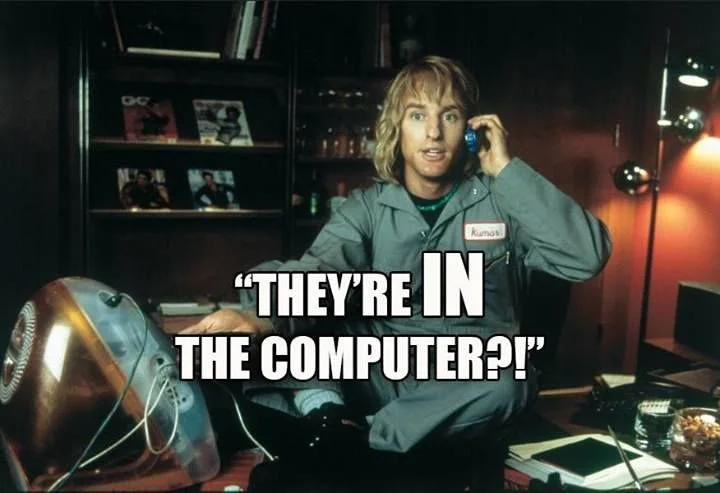
In October 2012, I wrote a column for Search Engine Watch about George Lois's book Damn Good Advice. I'd been a fan since college, and one of his rules has stuck with me longer than the rest: don't expect a creative idea to pop out of your computer.
Fourteen years later, a lot of marketing teams are expecting exactly that. And something does pop out. It just usually isn't the idea.
You've probably lived this one.
Boss: “Can we get something out on this today?”
AI: “Here are 1,200 words and three headline options.”
You, three hours later: still editing.
The draft took 30 seconds. Getting it to something you'd put your name on took the afternoon. That second number never makes it into the AI business case.
Everyone's Using It. Not Everyone's Getting Faster.
Canva's 2026 research found that 97% of marketing leaders use AI in their daily creative work, and 41% already call AI slop a considerable challenge. The pressure is real too. AirOps found that pipeline and revenue targets went up for about three-quarters of teams, while fewer than half got more budget. When AirOps asked leaders what people miss about their AI work, one described the hidden labor: editing slop, setting up systems, teaching others, reworking outputs.
Heinz Marketing talked with B2B leaders who are losing hours to polished-looking documents that turn out to be slop. One told his team he won't read AI-generated content, period. On X, Mitchell Hashimoto drew the line well: a rough draft is fine, but he won't accept first-pass output, because it's almost never right.
Fast drafts don't remove the work. They move it downstream, usually to the most senior person in the room.
Users vs. Builders
Most marketers use AI like a vending machine. Something lands on their plate, they type a request, something comes out. Tomorrow they start over with no context, no standards, and no memory of what worked last time. Of course the output is average. Average is what you asked for.
Builders ask a different question: why am I doing this from scratch every week? Then they build the thing that does it with the context already baked in.
I learned this by building. When I made DugoutIQ, my lineup app for youth baseball coaches, AI didn't build it for me. It sped up the parts that used to stall me, like turning league rules into logic and iterating on screens at 11 p.m. The coaching knowledge came from fifteen years in the dugout. At WSU, I built a story intake pipeline that scores and routes ideas before they ever hit my inbox. Neither one is fancy. Both gave me back hours every week, and the work got better instead of worse.
That's the gap. The user saves a few minutes on one task. The builder saves hours on every version of that task from then on.
Stop Measuring Time-to-Draft
If your team celebrates how fast a first draft appears, you're rewarding the wrong thing. Track how long it takes to get from idea to something you'd actually publish. A 30-second draft that needs two hours of senior editing loses to a system that gets you most of the way there on the first pass. Every time.
What Actually Helps
Write the brief before you prompt. Most slop is a thinking problem dressed up as a writing problem. If nobody decided who it's for, what it has to do, and what makes it different, the AI fills that gap with the most generic answer available. Designer Gary Simon made this point on X: prompt without direction and you get the lowest common denominator everyone else is getting. Use AI here too. Have it poke holes in your angle before it writes a word.
Build the process once. Your voice, your audience, your “never say this” list shouldn't live in someone's head or get retyped into a chat window every morning. Write them down and load them into your tools. Peter Yang open-sourced his /no-ai-slop skill, which strips 20-plus common slop patterns out of any draft. He solved it once and gets to use it forever. Individual prompts are practice reps. Systems are the playbook.
Close the loop. When you send a draft back, ask what the system was missing and fix that too, not just the draft. Feed in what got opened, clicked, and ignored. Your edits should get smaller every month. If they don't, the system isn't learning.
Hand the grind to agents. Intake and triage, meeting notes, turning one story into five channels, the monthly report. Clear inputs, clear outputs, predictable patterns. That's agent work. Put a human checkpoint before anything ships and let the agent do the rest.
Keep the last mile human. Peter Yang describes a 25/50/25 approach: he writes the rough draft himself, uses AI in the middle for clarity and argument-testing, then edits the end line by line. Leaders have to make it normal to send weak work back, too. The moment you start quietly cleaning up slop yourself, you've taught your team it's an acceptable handoff.
George Lois was right in 2012, and he's still right. The idea doesn't come out of the computer. What's changed is how much of the work around the idea can, if you take the time to build it that way.