I Built a Coaching App Because I Was Spending Too Much Time on Admin and Not Enough Time Coaching

It’s Sunday night. The kids are asleep. And I’m staring at a spreadsheet trying to remember if Braxton sat out last game or the game before. If Braxtyn threw 46 pitches on Saturday—or was it 48? Because 46 means he can pitch Tuesday. 48 means he can’t. And if I get that wrong, we’re looking at a potential forfeit in front of twelve families.
I’ve been doing this for more than fifteen years. Youth sports, travel ball, high school—every level you can coach at without getting a paycheck. And in all that time, the lineup process has never stopped being a headache. Not because the coaching is hard. Because the compliance is.
The Sunday Night Spreadsheet
Every youth baseball league has rules about playing time. Good rules. Rules that exist to make sure every kid gets on the field, nobody sits on the bench all game, and pitchers don’t blow out their arms at age ten. The problem isn’t the rules. The problem is that enforcing them falls entirely on the volunteer coach—which is to say, on you, at your kitchen table, on a Sunday night, with a spreadsheet that’s one accidental tab-press away from disaster.
Here’s what a typical lineup session looks like for me. Pull up last week’s lineup. Check who sat. Check who played infield versus outfield. Look up pitch counts. Calculate rest days based on age. Figure out which kids are at practice. Account for the one who texted at 4 PM saying he’ll be late. Try to make sure everyone gets their fair share without violating any of the twelve rules that govern a single Little League game.
Then do it again next week. And the week after that. For a sixteen-game season, plus tournaments.
You coach because you love the game. Not because you love spreadsheets.
The Game That Changed Everything
There wasn’t one single moment where I thought “I need to build an app.” It was more of a slow burn—fifteen years of accumulated tedium, crossed fingers, and close calls. But there was a tournament that crystallized it.
We played a team that wasn’t following the rules. Bench rotation violations, position requirements ignored—the kind of stuff that’s easy to miss if nobody’s checking. And it came back to bite us. Not them—us. Because in youth baseball, rule disputes don’t just affect the scoreboard. They affect the kids, the parents, the relationships between coaches, and the league’s trust that everyone is playing fair. Now, did they do this on purpose? Honestly, I don’t know. The optimist in me wants to say no, but regardless some kids were crushed and others elated… and maybe those should have been swapped?
I walked away from that tournament thinking: there has to be a better way. Not a better spreadsheet. Not a better paper system. Something that actually knows the rules and won’t let you break them—even by accident.
The Tools We Have (and What They Don’t Do)
There are great apps for youth baseball coaches. GameChanger is the gold standard for scorekeeping and live stats—and it’s free for coaches. TeamSnap handles scheduling and team communication. iScore is a deep-stat powerhouse for the analytics-minded.
But here’s what none of them do: prevent rule violations before they happen.
GameChanger can tell a league administrator that a pitcher exceeded their count—after the game is over. TeamSnap can help you schedule practice—but it won’t tell you that your lineup doesn’t follow your league’s rules. There are a dozen lineup generator apps on the App Store, and most of them give you a grid to fill in yourself. You’re still the one responsible for knowing the rules, checking the math, and hoping you didn’t make a mistake.
It’s the difference between a tool that records what happened and a tool that makes sure what’s about to happen is legit.
So I Built DugoutIQ
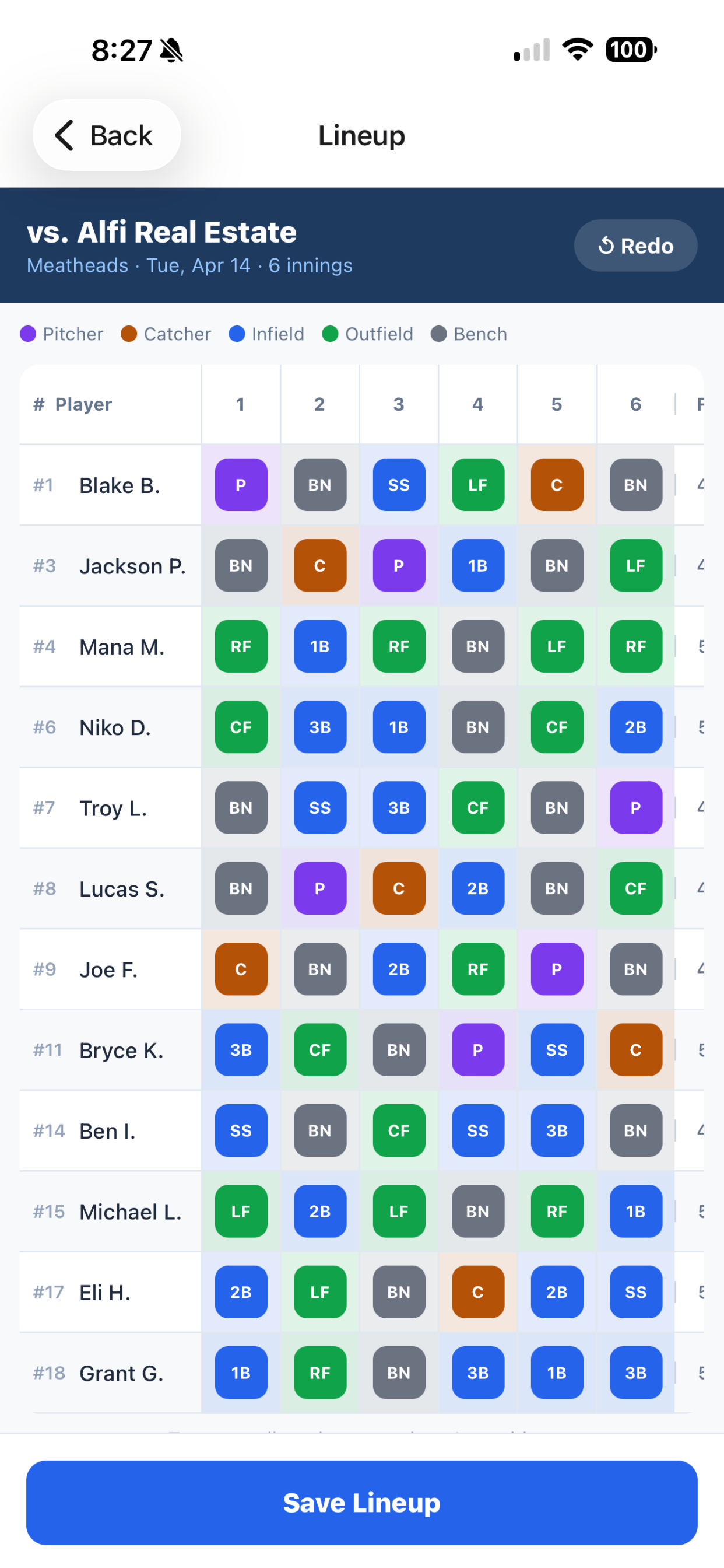
DugoutIQ is the app I wish I’d had for the last fifteen years. It’s a lineup tool that has your league’s rules built in—not as a reference document you read yourself, but as logic that runs every time you create or edit a lineup.
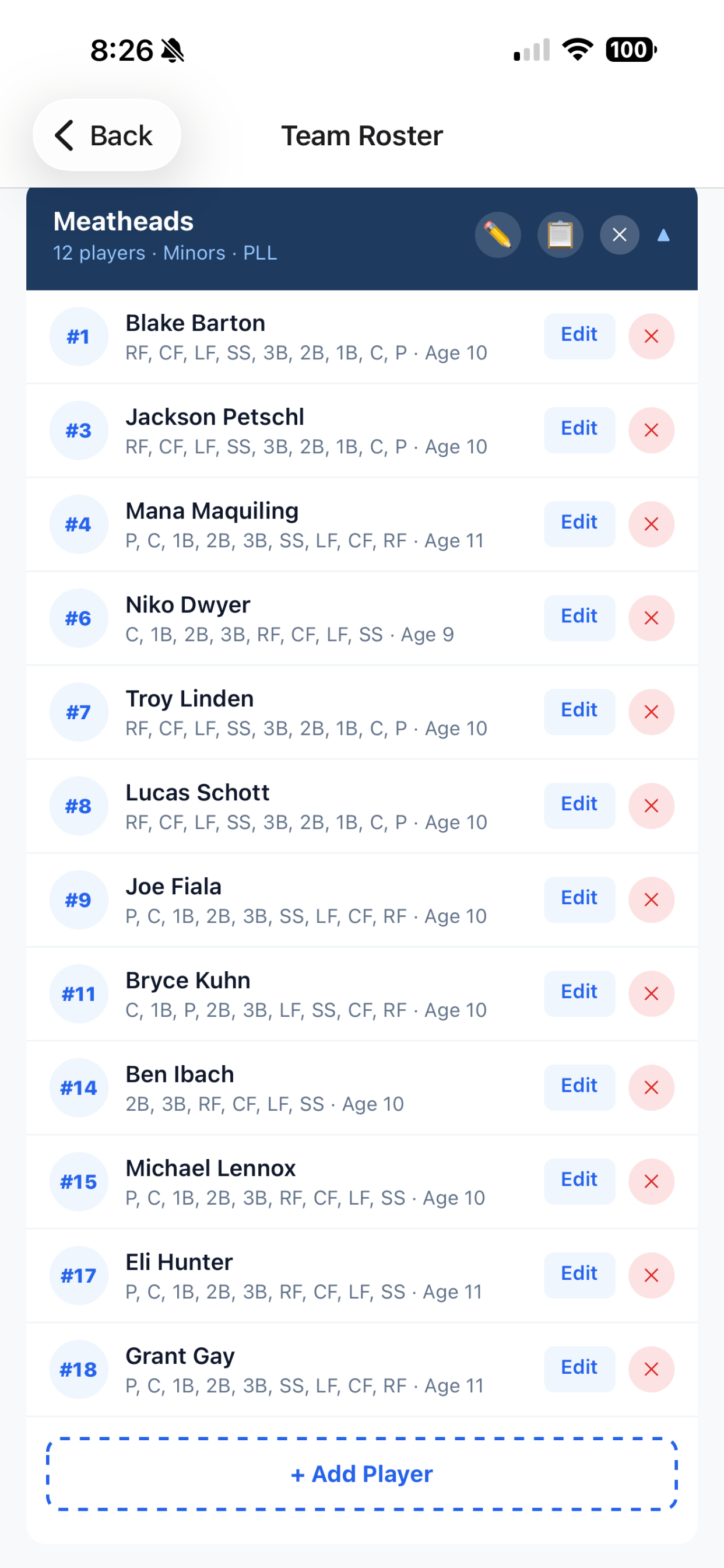
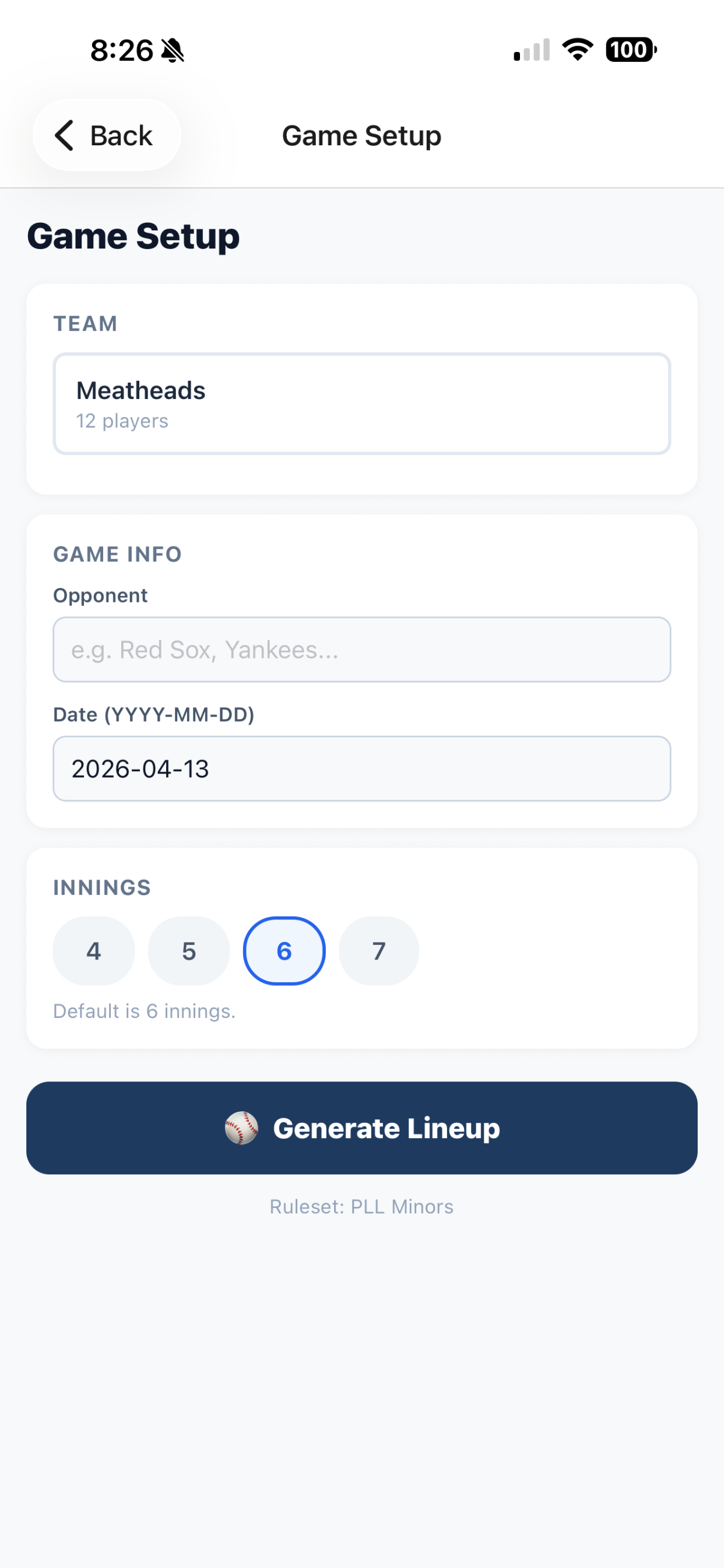
Tell it who’s on your roster and who showed up. It generates a complete, rule-compliant lineup in seconds. Bench rotation, position requirements, pitch count eligibility, rest day calculations, catcher-pitcher restrictions—all handled. If you want to swap a player manually, go for it. But if that swap would violate a rule, DugoutIQ catches it before the umpire (or the opposing GameChanger parent) does.
That’s the moment that matters. When a coach drags a kid to the pitcher spot and sees a red warning: “This player needs two more rest days based on Tuesday’s pitch count.” That’s the moment coaches will tell other coaches about. Because that’s the moment the app just saved them from a forfeit, an angry parent, or a week of league drama.
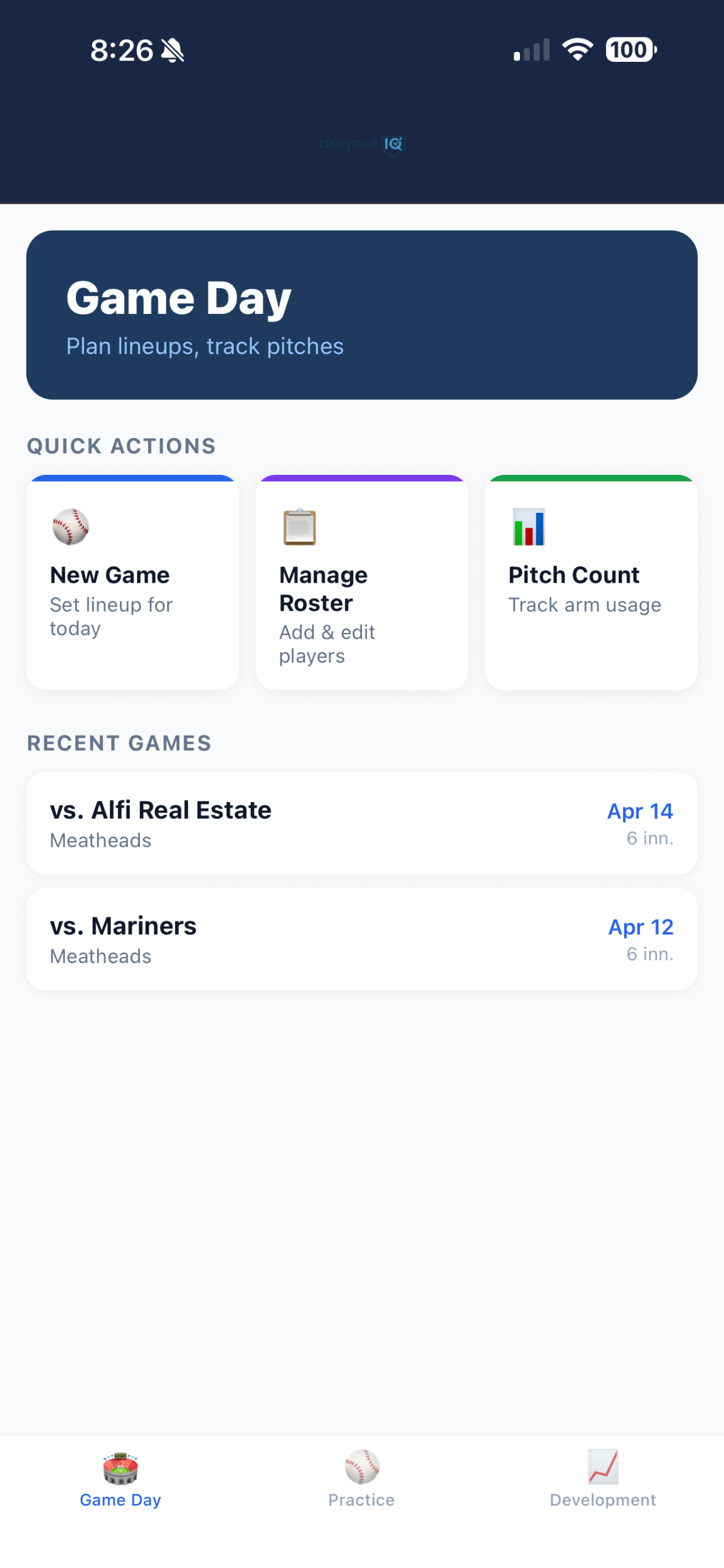
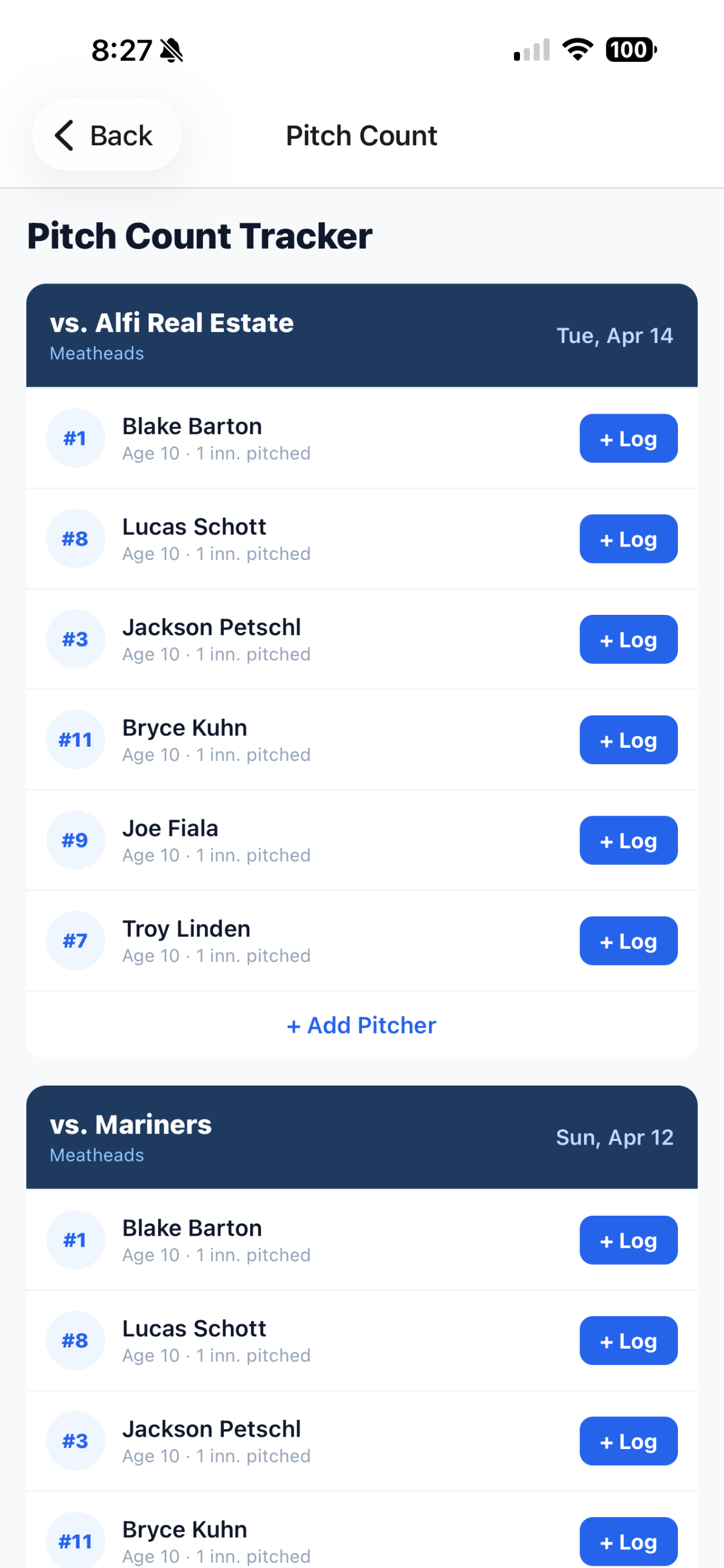
Beyond lineups, DugoutIQ tracks pitch counts by game with age-based limits, calculates mandatory rest days automatically, ensures fair play across the season with data to back it up, and now includes a full practice planner with a library of drills organized by skill area and age level. It works completely offline—because if your app needs WiFi to function at Field 4 on a Saturday morning, it’s useless.
Built Smarter, Not Just Harder
One thing I’ll share about how DugoutIQ came together: AI helps power it. Not in a gimmicky way—in a practical way. The kind of rule logic that would have taken a team of developers months to build, test, and refine was possible for me to iterate on rapidly because of AI-assisted development. It let me move from “I have an idea” to “coaches are testing this on their phones” faster than I ever thought possible.
When I was laid off from MSFT last year, I doubled down on my efforts to learn how to code. I took all kinds of courses, classes, and watched more YouTube than my kids on a Sunday morning after mom and dad went out the night before. I’m just dangerous enough to realllllly screw some stuff up.
For my fellow JetCityDigital readers who are interested in the builder side of this: AI didn’t build the app for me. It accelerated the parts that used to be bottlenecks—encoding complex rule systems, generating comprehensive drill libraries, iterating on UX. The coaching knowledge, the product decisions, the “what should this actually do” questions—those came from fifteen years in the dugout… and they’ll keep evolving.
Where DugoutIQ Stands Today
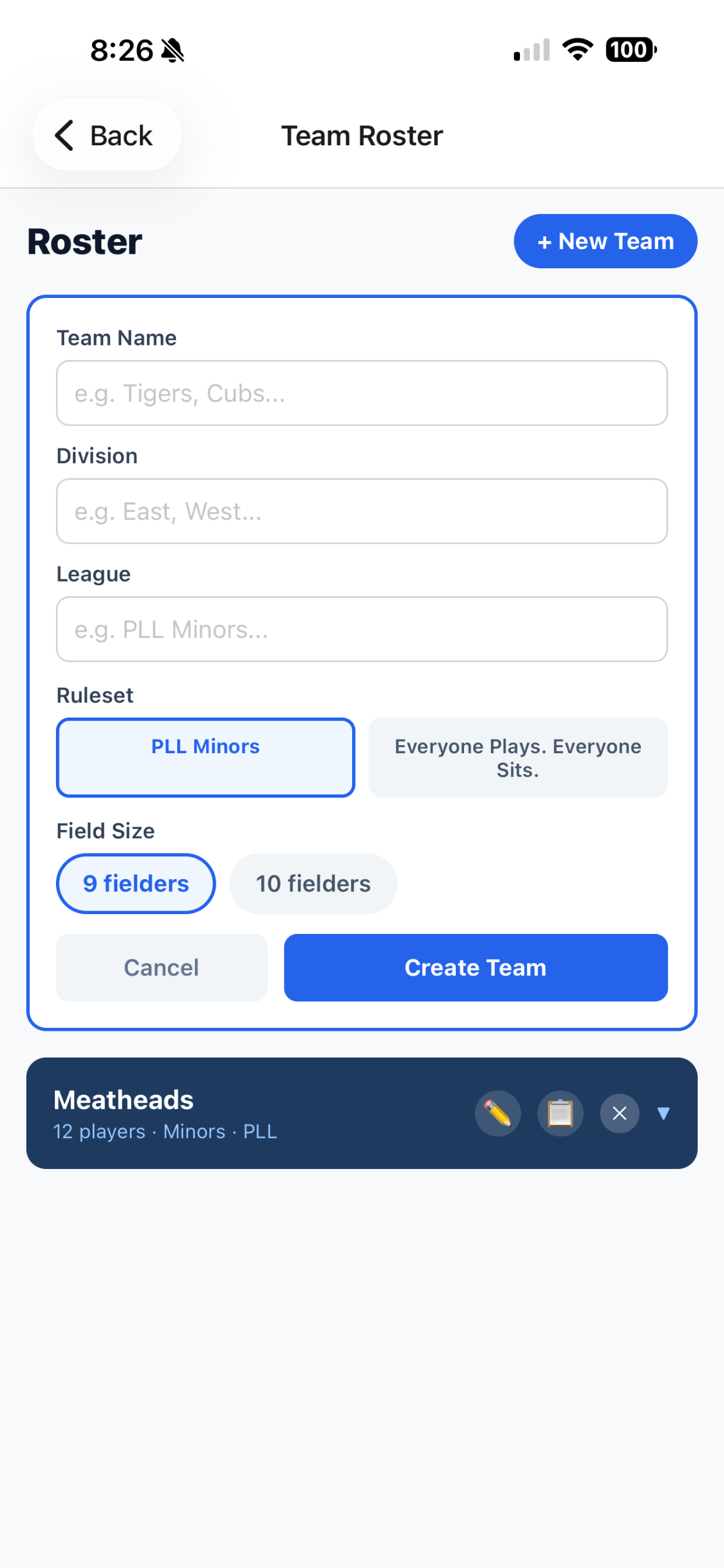
DugoutIQ is live on TestFlight right now, with real coaches testing it with their real teams. Little League rules are built in out of the box. We’ve also built a simpler “Everyone Plays, Everyone Sits” ruleset for leagues that just want basic fairness without the full Little League compliance framework. Support for 10-fielder divisions (for younger age groups) is in. Our Practice Planner will be the next section to launch, giving coaches a drill library and one-tap practice generation so they’re not Googling “baseball drills for 8 year olds” at 6 AM before Saturday practice.
Cal Ripken, PONY, and travel ball rulesets are coming next. A league admin dashboard—where a league can configure rules once and have every coach in the league see them automatically—is on the roadmap. And a player development tracker is in the works, because even at high levels it should be about developing athletes.
The Bigger Vision
Here’s what I believe: every youth baseball league should have a tool that ensures every kid gets fair playing time and every coach can focus on coaching instead of compliance. The technology exists to make rule violations a thing of the past—not by punishing coaches after the fact, but by making it impossible to accidentally create an illegal lineup in the first place.
If you’re a coach who has ever lost sleep over a lineup, DugoutIQ was built for you. If you’re a league administrator who’s tired of fielding complaints about playing time fairness, this is the tool that gives you data instead of drama. And if you’re a parent who just wants to know your kid is getting a fair shake—DugoutIQ makes that provable.
Try the Beta
DugoutIQ is available for beta testing on iOS via TestFlight. Visit dugoutiq.co to sign up for early access, or reach out to me directly. I’d love to hear from coaches who are as tired of the spreadsheet as I was.
Fifteen years of Sunday nights. It’s time to take them back!