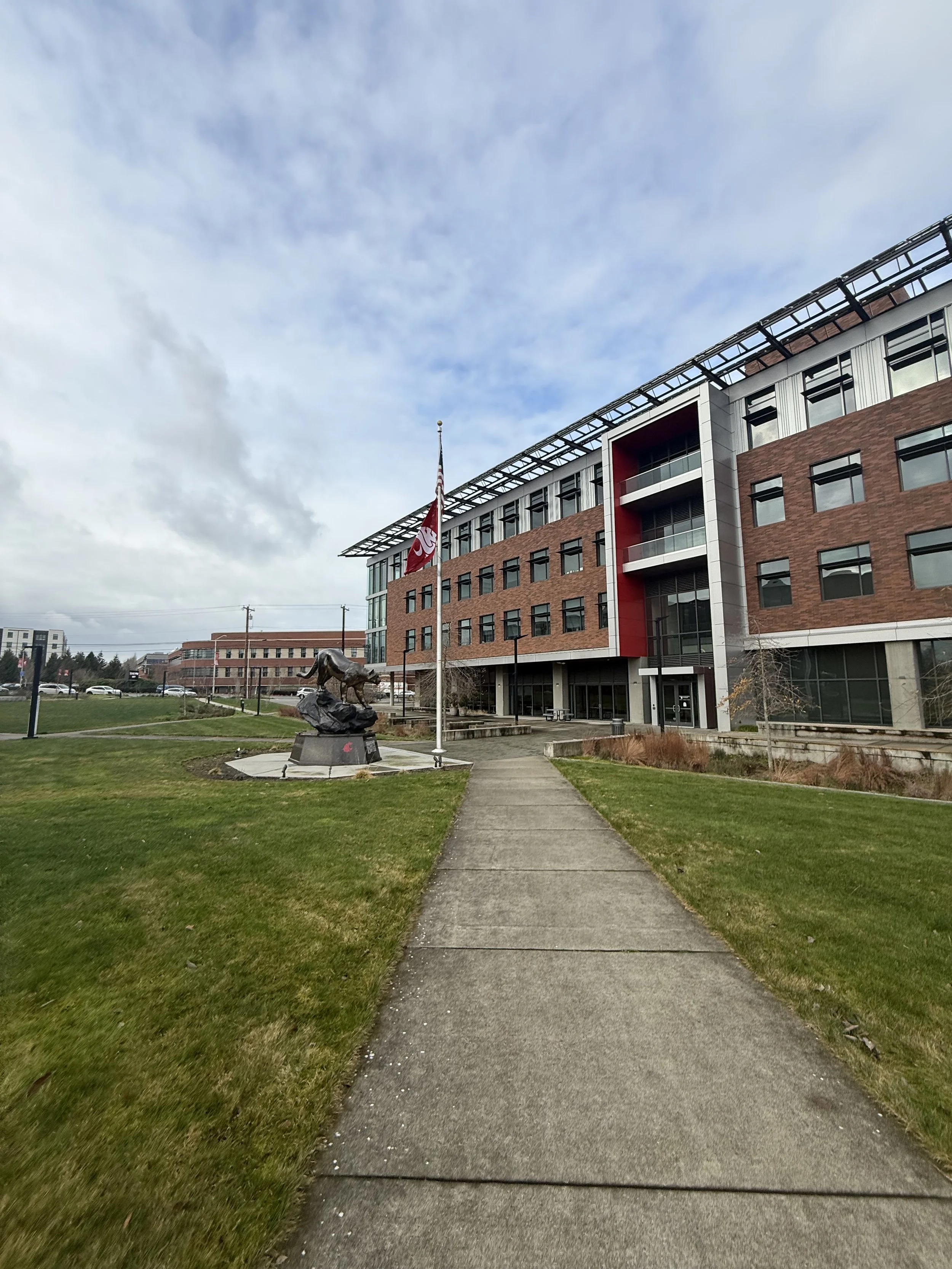
One Month In: What Higher Education Is Teaching Me
Thirty(ish) days into my new role as Director of Strategic Communications for Washington State University’s College of Education, Sport, and Human Sciences, I can confidently say: higher education is its own ecosystem.
And I mean that in the best possible way.
Coming from the corporate world, I thought I understood complex organizations. I’ve worked inside global companies and ran a team as part of a global advertising agency. I’ve navigated matrixed teams, brand guardrails, executive comms, product launches.
But higher ed? It runs on a different operating system.
Here’s what I’ve learned so far.
1. The Mission Is Real — And It’s Personal
In tech, we talked about impact. In higher ed, you see it.
You see it in:
A first-generation student who just landed a job.
A ROAR scholar building career readiness skills.
A faculty member who has spent 20 years advancing literacy research.
A donor honoring a former student with a new scholarship.
The through line isn’t quarterly performance. It’s transformation.
At WSU — a land-grant university — that mission isn’t just institutional language. It’s baked into the DNA. Access. Equity. Research that serves communities. Programs that prepare teachers, athletic trainers, sport leaders, and change-makers.
You feel the weight of that responsibility in a good way.
2. One Voice Is Harder Than It Sounds
I’ve spent much of this first month listening.
Faculty. Staff. Leadership. Development. Marketing.
What’s clear: alignment in higher ed is less about authority and more about trust.
You don’t “roll out” a strategy the way you might in a corporation. You socialize it. You test language. You build shared definitions. You make sure people see themselves in the narrative.
We’ve been talking a lot about what it means to operate as a College vs. a collection of Departments. Not as a slogan — but as a way of telling a unified story across departments, disciplines, and campuses.
It’s slower. It’s more relational.
And honestly? It’s more durable.
3. Story Is the Infrastructure
If I had to summarize my early observation in one sentence:
Higher education runs on story — whether it knows it or not.
There are incredible things happening every day:
Grants being awarded.
Students publishing research.
Alumni making an impact.
Faculty shaping national conversations.
But institutions often assume the work speaks for itself.
It doesn’t.
We’re beginning to build systems — what I’ve been calling a “Story Hub” — to better surface, organize, and amplify these narratives. Not to oversell. Not to hype.
But to ensure the right stories reach the right audiences:
Prospective students
Donors
Legislators
Alumni
Community partners
Story isn’t decoration. It’s strategy.
4. The Pace Is Different — But the Stakes Are High
Corporate comms and marketing are fast.
Higher ed is thoughtful.
There are more stakeholders. More governance layers. More historical context. More constituencies who care deeply (and should).
It requires patience.
But here’s what surprised me: the stakes are arguably higher.
We’re not just shaping brand perception. We’re influencing:
Public trust in education
Teacher and administrator pipelines
Workforce readiness
Research funding
Student opportunity
That weight changes how you approach the work.
5. AI Is Coming — And It’s Complicated
Given my background, AI inevitably enters the conversation.
In higher education, AI isn’t just a productivity tool. It’s a philosophical question.
How do we:
Support faculty experimenting responsibly?
Prepare future teachers and administrators to navigate AI in K-12 classrooms?
Protect academic integrity?
Use AI to amplify storytelling without diluting authenticity?
It’s nuanced. It’s evolving. And it requires humility.
I’ve been working to build AI into our workflows to quicken the pace at which we collect, triage, generate, and deliver stories. Stay tuned for more here…
6. Passion Is Everywhere
One thing that stands out: people in higher education care deeply.
About students. About their disciplines. About their colleagues. About the institution.
There’s a strong sense of stewardship — that we’re temporary caretakers of something bigger than ourselves.
That’s not something you feel in every industry.
What I’m Excited About Next
We’re laying foundations:
Sharpening narrative pillars.
Evaluating (and building) tools to streamline inbound stories.
Aligning messaging to reflect who we truly are — not just what we do.
It’s early.
But I’m energized.
Higher education is complex, sometimes messy, maybe slower than some would like — and profoundly meaningful.
Thirty days in, I’m grateful to be here.
Onward and Go Cougs!